Published July 6, 2026 · By 3D Printzkart · 5 min read
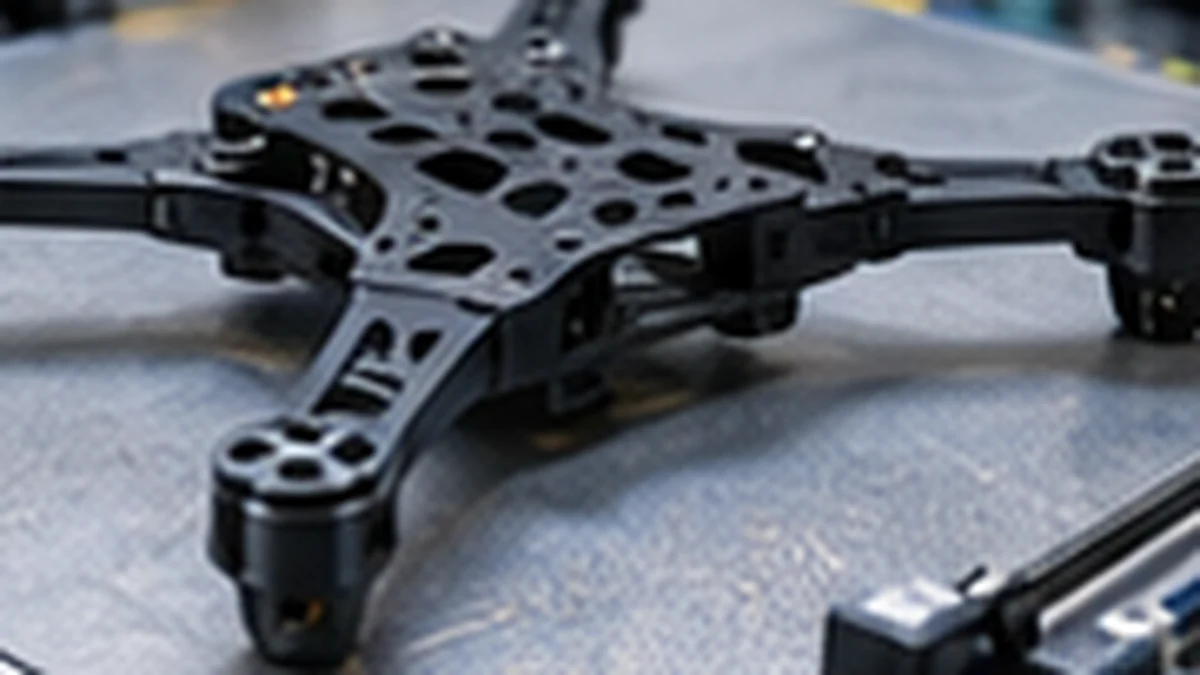
How to design and 3D print drone frames in carbon-fiber nylon — weight optimization, stiffness, and flight-tested durability.
3D Printed Drone Frames is reshaping how engineers, designers, and manufacturers build and validate parts. How to design and 3D print drone frames in carbon-fiber nylon — weight optimization, stiffness, and flight-tested durability.
Whether you are a startup prototyping a first product, an OEM scaling production, or a researcher pushing boundaries, understanding the strengths, limits, and cost drivers of this technology helps you avoid costly mistakes, shorten development cycles, and ship better products.
Modern UAVs (unmanned aerial vehicles) demand extreme strength-to-weight ratios, rapid iteration, and complex geometries that traditional machining cannot deliver cost-effectively. 3D printing — especially SLS nylon and carbon-fiber FDM — lets drone engineers design, print, flight-test, and iterate in days instead of weeks.
| Part | Technology | Material | Why |
|---|---|---|---|
| Frame | SLS / CF-FDM | PA12 / PA-CF | Strength-to-weight |
| Motor mount | SLS / CF-FDM | PA-CF | Stiffness, heat resistance |
| Gimbal | SLA / SLS | Tough resin / PA12 | Precision, vibration damping |
| Enclosure | SLA / SLS | PA12 / resin | Aerodynamic surface, sealing |
Bangalore's manufacturing ecosystem — aerospace, automotive, robotics, drones, medical devices, and consumer products — demands fast iteration and low-volume production. 3D printing delivers:
Selecting the right material is the single biggest driver of part performance and cost.
We offer Drone Parts with a wide range of materials, free DFM review, and fast turnaround. Whether you need a single prototype or a 500-unit production run, our team matches the right technology and material to your functional requirements.
Following these design rules ensures reliable, cost-effective parts:
Costs scale with material volume, print time, and post-processing. Typical Bangalore pricing:
Lead times: FDM 1-3 days, SLA/SLS 2-5 days, DMLS 1-3 weeks. Express service available for urgent projects.
3D printing excels for complex geometries, low volumes (1-100 units), and rapid iterations. For simple parts at high volume (500+), CNC machining or injection molding becomes more economical. Many teams use a hybrid approach: 3D print prototypes, then transition to traditional manufacturing for production.
Our Bangalore facility offers FDM, SLA, SLS, and DMLS with free DFM review on every order. We provide material recommendations, orientation optimization, and post-processing (sanding, painting, dyeing, vapor smoothing) to deliver production-ready parts. Contact us for a free quote and DFM review.
3D Printed Drone Frames is a powerful tool when applied to the right problems. Start with a clear functional requirement, choose the technology that meets it at the lowest cost, and iterate quickly. With the right partner and DFM guidance, you can move from concept to production-ready parts in days.
Carbon-fiber reinforced nylon (PA-CF) or SLS nylon PA12 for strength-to-weight. PLA only for visual prototypes.
30-60% vs machined aluminum using hollow sections and lattice infill.
Carbon-fiber reinforced nylon (PA-CF) or SLS nylon PA12 for strength-to-weight. PLA only for visual prototypes.
30-60% vs machined aluminum using hollow sections and lattice infill.
From prototypes to production. FDM, SLA, SLS. Free DFM review. Quote in 1 hour.
Connect With Our Expert